
PlainsCraft Covered Wagons
A Wilder Kind of Experience
Adding Glamping Wagons to Campgrounds

Adding glamping covered wagons to campgrounds is one of the most reliable ways to increase revenue per site, attract new guest segments, and modernize your property without expanding your footprint. Campgrounds that diversify their accommodation mix consistently see higher occupancy, stronger nightly rates, return visitors, and improved guest satisfaction.
Why Campgrounds Are Expanding Into Glamping
The campground industry is evolving quickly. Today’s guests are looking for comfort, convenience, and memorable experiences. Many of those travelers wanting to enjoy being unplugged and immersing themselves in nature. They want a simple booking process, a comfortable bed, climate control, and a unique place to stay.
This shift has created strong demand for upgraded accommodations across the outdoor hospitality sector— providing guests that experience without needing to invest in camping gear or towing an RV. Just look at the latest wholesale shipment numbers from RVIA, which shows—for the second month in a row—towables and motorhome shipments down Year-over-Year, while RV Park Model RVs are trending in the opposite direction seeing a 20% increase YoY. Campgrounds, RV parks, and resorts that once relied primarily on tent and RV sites are now adding premium glamping accommodation options to their property to remain competitive and expand their guest reach. Properties that introduce glamping units often see immediate changes & improvements in occupancy rate, ADR revenue, and guest demographics—along with overall annual park revenue and profit increases.
Adding glamping wagons to campgrounds is not about replacing traditional camping. It is about expanding your offering to capture a larger share of the market.
What Glamping Wagons Add That Traditional Sites Cannot
1. Higher nightly revenue
Tent and RV sites typically operate within a limited pricing range. Our glamping wagons allow campground owners to introduce premium accommodations that significantly increase revenue per booking. Guests are consistently willing to pay more for comfort, privacy, and a distinctive stay experience.
2. New customer segments
Glamping attracts travelers who may never consider traditional camping, including:
- Couples seeking weekend getaways
- Families celebrating special occasions
- Urban travelers without camping equipment
- Guests looking for short-stay experiences
These groups often spend more per visit and are more likely to book midweek stays.
3. Extended operating seasons
Insulated, climate-controlled wagons can operate beyond peak summer months. This helps stabilise cash flow and improves asset utilisation throughout the year.
4. Stronger brand positioning
A well-designed cluster of glamping wagons instantly elevates the perception of a campground. Properties that offer unique accommodations stand out in online searches, generate better photos for marketing, and attract more attention on booking platforms.
Infrastructure Considerations Before Adding Glamping Wagons
Adding glamping wagons is one of the most efficient ways to upgrade a campground. Because our wagons are purpose-built for hospitality use, most properties can integrate them quickly using existing infrastructure. This makes expansion faster and more cost-effective than constructing traditional buildings.
Before installation, we typically help campground owners review a few key factors to ensure a smooth rollout and long-term performance.
Utility connections
Reliable access to electricity and water is essential for guest comfort. Our wagons are designed to connect easily to standard campground utility systems.
Site preparation and drainage
A level, well-drained site protects the structure and reduces maintenance over time. Proper preparation helps ensure durability and consistent guest satisfaction.
Electrical capacity
Modern glamping units require sufficient power for heating, cooling, lighting, and appliances. Planning capacity early helps avoid delays during installation.
Zoning and permits
In many areas, glamping wagons are classified similarly to cabins or temporary accommodations, which can simplify the approval process compared to permanent structures.
Layout and guest experience
Thoughtful spacing, orientation, and landscaping improve privacy and elevate the guest experience. When these details are planned early, properties typically launch faster and start generating revenue sooner.
The Financial Case for Adding Glamping Wagons to Campgrounds
The economics of glamping are straightforward. Premium accommodations generate significantly higher revenue per unit compared to traditional camping sites.
Below is a conservative example for a single wagon.
- Average nightly rate: $195
- Booked nights per year: 219
- Occupancy rate: 65%
Annual revenue per wagon: $27,758
With multiple wagons, revenue scales quickly while operating costs remain manageable. In many cases, a single glamping wagon can produce the same revenue as several standard sites combined. This is why campground owners increasingly view glamping as a high-impact investment rather than a niche offering.
Glamping Wagon ROI for Campground Owners
Return on investment depends on several factors, including pricing, occupancy, and operating efficiency. However, the revenue advantages are consistent across markets.
Key drivers of strong ROI include:
- Higher nightly rates
- Longer average stays
- Repeat guest bookings
- Improved online visibility
- Year-round revenue potential
Properties that introduce premium accommodations often experience stronger overall performance across the entire campground, not just within the new units.
Luxury Wagons for RV Parks Create Competitive Advantage
Competition in the outdoor hospitality industry continues to increase.
New properties are entering the market with modern amenities and distinctive accommodation options. Existing campgrounds that fail to evolve risk losing bookings to competitors offering upgraded experiences.
Luxury covered glamping wagons allow established properties to modernize quickly without major redevelopment.
They provide a clear path to:
- Increase revenue per site
- Improve guest satisfaction
- Strengthen brand perception
- Attract higher-spending visitors
- Future-proof the business
This combination makes glamping one of the most practical upgrades available to campground owners today.
How Glamping Attracts More Guests to Your Campground
Introducing unique accommodations like glamping wagons can significantly boost your park’s marketing performance. Guests are naturally drawn to new experiences—and they love to share them.
Referral marketing tactics like word-of-mouth and reviews remain some of the most powerful, high-converting (and timeless) drivers of new bookings, regardless of how digital trends evolve. When guests have a memorable stay, they become your best promoters.

Whether someone is actively seeking recommendations or simply responding to FOMO—fear of missing out—distinctive glamping accommodations have a way of marketing themselves.
Glamping wagons also create strong visual appeal and help you reach new audiences actively searching for unique travel experiences.
Common marketing benefits include:
- Increased online bookings
- Greater visibility on travel and booking platforms
- Stronger social media engagement and shareability
- More positive guest reviews
- Higher rates of repeat visits
These effects often extend beyond the glamping units themselves, lifting occupancy across the entire property.
Future-Proofing Your Campground With Glamping
At a recent industry conference, one trend became clear: guests want the camping experience—but not the hassle of owning the gear.
Operators shared stories of storage areas filled with abandoned tents, chairs, and equipment left behind after one-time trips. Today’s travelers are willing to spend for the experience—but much of that money is going to retailers or third-party rentals instead of staying in your park.
Properties that offer ready-to-stay glamping accommodations are capturing that demand, keeping more revenue in-house while removing friction for guests.
Upgrade Your Campground With Confidence
Adding glamping wagons to campgrounds is one of the most effective ways to increase revenue, improve occupancy, and attract new guests without expanding your land footprint. PlainsCraft Wagons designs and builds hospitality-grade wagons engineered for durability, performance, and guest appeal.
If you are planning your next phase of growth, the right time to evaluate glamping is now.
FAQs
Q: Will glamping wagons compete with my RV sites?
A: No. They serve different guest segments. Many RV travelers still prefer traditional sites, while glamping attracts guests who want comfort without owning equipment. Both offerings can coexist successfully.
Q: Are maintenance costs high?
A: Commercial-grade wagons are built for durability and frequent guest use. Routine maintenance is similar to that of small cabins and typically predictable.
Q: Do glamping wagons require major infrastructure upgrades?
A: In most cases, existing campground infrastructure can support glamping units with minimal modification. Proper planning during the design phase helps avoid unexpected costs.
Q: Can glamping wagons operate year-round?
A: Yes. Four-season insulated wagons with heating and cooling systems can remain operational throughout the year in many regions.
How RV Parks Are Increasing Revenue Fast with Covered Glamping Wagons
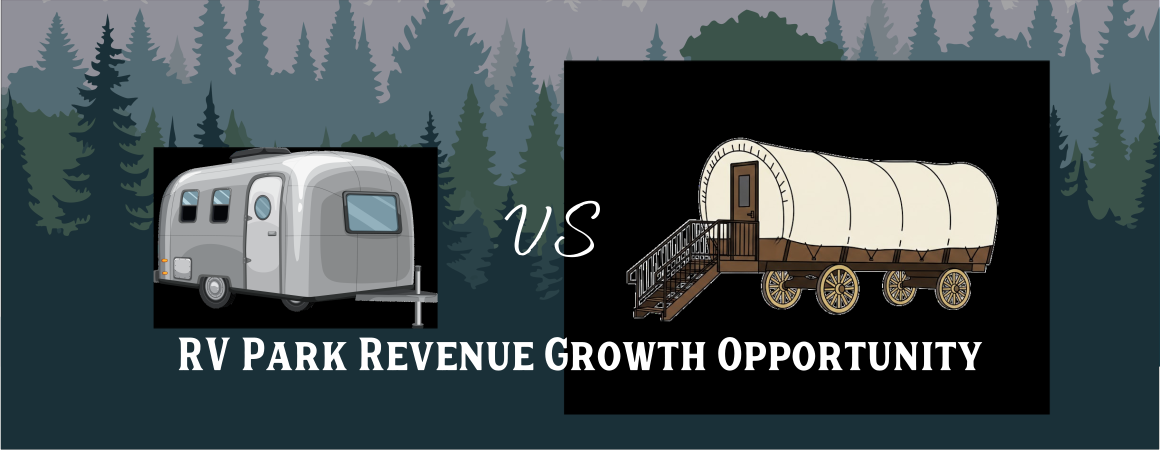
RV park revenue and profitability improve dramatically when parks increase average nightly rates per site. Covered glamping wagons can generate nearly four times the revenue of traditional RV sites while fitting into existing RV park infrastructure — making them a powerful upgrade to the modern RV park business model.
Explore Glamping Wagons | Why Choose Glamping Wagons | Schedule a Consult
RV Park Revenue Is Changing—Fast
RV park revenue has traditionally been driven by nightly site rates, seasonal occupancy, and long-term guests. But over the past several years, a shift in traveler expectations and RV economics has changed how successful operators think about profitability. The question many owners are asking now isn’t“ Do RV parks make money?” It’s “How do I increase revenue without expanding land, utilities, or staff?” That’s where covered glamping wagons enter the picture.
That’s where covered glamping wagons enter the picture
Are RV Parks Profitable Today?
Short answer: Yes — but margins vary widely.
According to Sun Camper RV, the average RV campground rates typically fall between $40–$90 per night, depending on ownership type, region, season, and amenities. Occupancy often fluctuates between 55–70% annually for most parks.
That means a typical RV site earning:
- $50/night
- 65% occupancy
- 219 operating nights
Generates roughly: $7,118 per site, per season
That’s solid — but it also highlights a ceiling in the traditional RV park business model.
The RV Park Business Model Problem
Most RV parks face the same constraints:
- Fixed land footprint
- Existing utility infrastructure (or permitting)
- Seasonal demand swings
- Price sensitivity among RV guests
Raising rates alone often leads to pushback. Expanding footprints and/or sites requires permitting and our most valuable asset—time!
This is why many operators are exploring campground ideas that:
- Use existing RV infrastructure
- Increase revenue per site
- Expand audience to non-RV travelers

Graphic from the KOA 2025 Campground and Hospitality Report (page 7)
What Are Covered Glamping Wagons?
Covered glamping wagons are fully built, semi-portable lodging units designed to plug directly into existing RV sites — typically 50-amp full-hookup.
They attract:
- Couples
- Families
- Non-RV travelers
- Experiential travelers willing to pay premium nightly rates
And they do it without lengthy construction timelines.
The Math — How Covered Wagons Increase RV Park Revenue
Let’s look at conservative numbers, in the chart below.

Increased Park Revenue Potential Per Site
+$20,442 more per site, per season
~287% increase in revenue
This is the same footprint. The same utilities. Just a higher-yield unit.

Scaling 6x Revenue Impact Across a Campground
Using the same scenario from above, but with adding a six (6) covered wagon multiplier

This is why many owners now view glamping units as a revenue multiplier, not an amenity.
Why Covered Wagons Work in RV Economics
Covered wagons succeed because they sit at the intersection of:
- Hospitality pricing
- RV infrastructure efficiency
- Experiential travel demand
Industry data shows covered wagons are experiencing ~27% growth in booking popularity, yet still account for only ~2% of glamping inventory. That imbalance creates opportunity.
Key advantages:
- Higher nightly rates than RV sites
- Faster deployment than Cabins, Yurts, Tents, etc.
- Broader guest demographic
- Seasonal flexibility
- Strong visual appeal for marketing purposes
How Fast Can RV Parks See Revenue?
Unlike traditional campground construction projects, glamping wagons:
- Do not require long build timelines
- Can be installed quickly
- Can go live in the same booking season
For parks ordering early in the year, it’s realistic to be booking by late summer or early fall, allowing operators to capture peak and shoulder-season demand immediately.
Is Owning an RV Park Profitable with Glamping?
For many owners, the answer is more profitable — and faster.
Covered glamping wagons:
- Increase revenue per site
- Improve overall park ADR
- Attract new guest segments
- Diversify income streams
- Reduce reliance on RV-only demand
They don’t replace RV sites — they enhance them
Final Thoughts on RV Park Revenue Growth
RV parks have always been profitable businesses. But the most successful operators today are rethinking how each site performs.
Covered glamping wagons offer:
- A proven way to increase RV park revenue
- A low-friction upgrade to existing infrastructure
- A clear, math-backed path to higher profitability
For owners asking “Is owning an RV park profitable long term?” — the answer increasingly depends on how adaptable the park is to changing guest demand.
See What This Looks Like for Your Park
Curious what this would look like using your current RV rates and occupancy? A simple ROI model can show the impact in minutes.
Use our RV Park Revenue Calculator to see how converting just a few RV sites into covered glamping wagons could impact your revenue this season — using your actual numbers.
FAQs
A: The best way to determine fit is to look at your current RV rates, occupancy, season length, and available infrastructure. A simple revenue model can quickly show whether converting a few RV sites into covered wagons could materially impact your park’s profitability.
A: Covered glamping wagons allow parks to generate significantly higher nightly rates from existing RV sites. Because they appeal to non-RV travelers and experiential guests, they often book at premium prices while using the same utilities and footprint as a traditional RV site.
A: In many cases, covered glamping wagons can begin generating revenue within the same season they are installed. Because they do not involve lengthy construction timelines, parks that deploy units ahead of peak season can often start booking almost immediately.
A: No. Covered glamping wagons are semi-portable units designed to integrate with RV park infrastructure. They typically do not require the same permitting or construction timelines as permanent cabins, though local regulations should always be reviewed.
A: Yes. Covered glamping wagons perform well in seasonal markets because they attract guests willing to pay higher nightly rates during peak and shoulder seasons. Even in shorter operating windows, the revenue per site can significantly exceed that of a traditional RV site.
Covered glamping wagons typically attract:
– Families looking for unique stays
– Guests without RVs (Millennials & Gen Z’ers)
– Traveling workers
– Experience-driven travelers willing to pay premium rates
– This expands a park’s audience beyond traditional R
A: They complement the traditional RV park business model by increasing revenue per site without requiring additional land or utilities. Many operators use them strategically to maximize underutilized sites or diversify their lodging mix.
A: They can — and increasingly, they do. Many successful parks diversify revenue through premium lodging, glamping units, seasonal rentals, and experiential accommodations. These additions help increase average nightly rates and reduce reliance on RV-only demand.
A: Most covered glamping wagons are designed to connect directly to existing full-hookup RV sites, including 50-amp electrical service, water, and sewer. This makes them easier to deploy compared to traditional cabin builds.
A: Average RV campground rates typically range from $40 to $90 per night, depending on region, amenities, and seasonality. Rates in high-demand areas or resort-style parks may exceed this range, while rural or seasonal parks often trend lower.
A: Yes — RV parks can be very profitable, especially when occupancy is strong and operating costs are controlled. Profitability varies widely based on location, season length, pricing strategy, and how effectively each site is monetized. Many parks increase profitability by adding higher-yield lodging options, like covered glamping wagons, alongside traditional RV sites.
A: For many owners, yes. Adding glamping units can improve overall park revenue, increase average nightly rates, and attract new customer segments. While results vary by market, glamping units often provide higher revenue per square foot than standard RV sites.
2025: A Year of New—Ideas, Products & People at PlainsCraft
2025 was a year defined by creativity, connection, and transformative growth in the outdoor hospitality world. As more campgrounds, resorts, venues, and property owners introduce unique guest experiences, PlainsCraft is honored to have played a role in expanding what’s possible.
From new product launches to expanding our customer footprint, industry recognition, and strengthened partnerships, here’s a complete look back at PlainsCraft’s year and what’s setting the stage for an exciting 2026.
Growing Across the Country: New Customers & New Locations
From first-time customers to returning partners expanding their offerings, 2025 brought PlainsCraft Wagons, Shower Houses, and Outhouses to incredible new destinations. Each installation highlights the creativity and commitment owners bring to elevating their guests’ experience.
Here are the incredible new locations you’ll now find PlainsCraft craftsmanship:
New Installs Included:
- Louisville, KY — Rob Sherman welcomed an Outhouse
- Fort Wayne, IN — Big Al installed a new Shower House
- Branson, MO — Eras RV Resort capitalized on our show special at COE and added its first Wagon
- Roosevelt, OK — Full Send Metal Works purchased Wagons
- Hot Springs, AR — Music Mountain Retreat expanded with Wagons
- Petal, MS — River Bend Sporting Clays added Wagons
- Umatilla, FL — Nelson’s Outdoor Resort installed an Outhouse
- West Liberty, KY — Rogoff Property Management now hosts multiple Shower Houses
Each of these owners saw the potential of outdoor hospitality and invested in enhancing their guest experiences in creative ways.
Every Wagon Has a Story — Explore Them All
Check out our interactive “Stay in a Covered Wagon” map to explore real destinations across the country—and see how owners bring PlainsCraft wagons to life.
Introducing Two New PlainsCraft Products
Outdoor Shower House
Designed to elevate comfort while preserving rustic charm, the Shower House quickly became a customer favorite. It brings privacy, quality, and style to campgrounds and outdoor stays of all kinds.
ADA Glamping Wagon
Inclusivity took center stage in 2025 with the launch of the ADA Wagon. Featuring a wider ramp, adaptable interior layout, and accessible bathroom options, it opens the outdoors to more guests while preserving PlainsCraft’s signature style.
Growing Our Team: Welcoming Tara
This year, we were excited to welcome Tara to the PlainsCraft team as our new Marketing Director. She brings more than 15 years of experience in marketing across both in-house and agency roles.
Tara has a strong background in brand development, omni-channel strategy, SEO, and storytelling. Her focus on customer relationships, digital growth, and purposeful content has already helped us share the magic of PlainsCraft with more people across the country.

She also brings a data-driven mindset, helping us better understand trends within the outdoor hospitality industry and ensuring our strategies are backed by strong insights and measurable results.
An avid camper herself, Tara enjoys being a “weekend warrior” with her kids, family, and friends — spending time at local parks, on the water, and exploring the outdoors. Her love for camping makes her a natural fit for our mission to deliver structures that not only meet but exceed guest expectations.
Achievements & Recognition in 2025
Achieved ANSI 119.5 Certification for Park Models
Our products continue to meet national safety and quality standards — an achievement our team holds with pride.
Zero Employee Accidents
Safety is foundational at PlainsCraft. We’re proud to have completed another full year without a single workplace injury.
Industry Recognition
We were honored as:
These recognitions reflect both the craftsmanship of our team and the creativity of our customers.
Looking Ahead to 2026
The momentum of 2025 pushes us into the new year with exciting developments on the horizon:
- Revenue Share Program
- Themed Experience Packages
- New product improvements and innovations
As outdoor hospitality continues to grow, we remain committed to helping owners create meaningful, memorable experiences for their guests.
PM Renovations & Construction
A new partnership offering customers support with park construction, site prep, and campground development. (More details coming soon.)
Expanded Financing Options
We worked closely with our financing partners to broaden access and flexibility, helping more owners bring their outdoor hospitality projects to life.
Thank You for an Incredible Year
To our customers, partners, and community — thank you for trusting PlainsCraft to be part of your outdoor hospitality vision.
Here’s to a new year filled with growth, collaboration, and unforgettable guest stays.
Ready to Plan for 2026?
If you’re planning for 2026, we’d love to help!
Conference Recap of the 2025 Outdoor Hospitality Conference & Expo (OHCE)

Insights, inspiration, and a few wagon-worthy winks from OHI’s biggest industry event.
TL;DR: Here’s what stood out:
- The keynote emphasized perseverance, mindset shifts, and finding opportunity within challenges.
- Market insights showed softened snowbird season, shifting occupancy, and rising last-minute bookings.
- Regional sessions shared strategies such as targeting labor markets, influencers for social, and amenities or offerings to increase guest experience.
- Owner roundtables highlighted security tech, golf cart leasing, off-season revenue generators, and hiring for practices for hospitality.
- Customer service sessions stressed clear expectations, staff autonomy, recovery strategies, and healthy boundaries.
- Future trends pointed to dynamic pricing, OTA strategy, mobile-first booking, and AI-supported operations.
- Experience-focused stays, intentional travel, and tech-enabled communication will shape the next era of outdoor hospitality.
This year’s Expo delivered record attendance, powerhouse keynote speakers, and some of the most forward-thinking conversations our industry has seen. From motivation and mindset to operational strategies, emerging trends, and the evolving landscape of outdoor hospitality, the two-day event brought together leaders, owners, operators, and influencers with one goal: to elevate the guest experience and the businesses that serve them.
Below is a full recap of the major sessions, ideas, and takeaways.
As for the rest of our time, you ask? We were proudly showing off the debut of our Shower House and our most popular Covered Wagon — the Mountaineer.
Session: Welcome to OHCE© 2025 | Keynote
Speakers: Damien Harmon, President of Subway in North American
The Race to Greatness with Damion
The Expo kicked off with an energizing keynote from Damion, who challenged attendees to embrace the messy, difficult parts of getting started. According to Damion, “The start is hard—keep going.”
He reminded us that humans naturally lean toward negative thinking, but success requires retraining our minds toward positivity and opportunity.
Key Themes

- Challenges are diamonds in disguise. “Keep turning the diamond until you see the brilliance.” Each challenge has value—you simply have to look deeper.
- Leverage your network. Opportunity often comes from the people around you. “Open the door” was a recurring message.
- Persist past the hard parts. Improvement requires asking where you can grow and who can help you get there.
A final quote that resonated: “Greatness is not only found at the finish line. It is discovered in every decision to keep going— when stopping would be easier.”
Damion set the tone for an event focused on resilience, adaptability, and long-term vision.
Recognizing Excellence: Terry’s Address & Awards
Terry took the stage to honor individuals who go “above and beyond” in outdoor hospitality, including presentation of the Outdoor Hospitality Award of Excellence.
A standout moment was the recognition of Joe Moore — CPO and OHC owner of Moore’s Campground Consulting. Joe donates monthly to the OHI Foundation and supports communities during natural disasters. His words were heartfelt:
“Giving back means a lot—God gave me the ability to do it.”
— Joe Moore, CPO and OHC Owner of Moore’s Campground Consulting
PlainsCraft perspective: Damion’s message rang true for us at PlainsCraft. Outdoor hospitality is built by people who show up with intention, solve problems daily, and create meaningful guest experiences. The challenges we all face—big or small—often spark the innovation that moves our industry forward.
We could’ve shouted “amen!” when Damion described challenges as diamonds in disguise. From building custom wagons to helping parks enhance their offerings, we’ve seen how obstacles can turn into opportunities. Many of our best ideas were born from moments that pushed us to think differently.
Persistence through the hard parts is something we know well. Craftsmanship and innovation require patience, consistency, and asking the right questions. Growth is always a team effort, and we’re grateful to collaborate with partners who share that spirit.
And finally, greatness shows up in the choice to keep going when it would be easier to stop. We see that dedication in campground owners across the country, and our mission is to support them as they create unforgettable experiences for their guests.
See some of the “diamond” features built to
solve customer challenges. >>
Campfire Breakout Sessions
After the welcome keynote, attendees headed off into the first of many Campfire Sessions offered throughout the event. While we would’ve loved to be in every room at once, we focused on the sessions we were able to attend. Among the many incredible breakouts, the two Campfire Sessions we joined — the Southwest Region session and the Owners Roundtable — absolutely did not disappoint. They delivered some of the most practical, operator-focused conversations of the week, packed with valuable takeaways and recommendations. Owners walked away with fresh ideas for optimizing operations, thoughtful considerations for future planning, and even a few cautions to keep in mind for everyday practices.
Southwest Region: Real Talk & Real Strategies
Moderated by Mike Harrison, COO CRR Hospitality, Our Campfire Session dove deep into current trends and the challenges many parks are facing in that region of the U.S. — from shifting occupancy patterns to RV market slowdowns and leaving us asking… “where did all the snowbirds go?”
Attendees walked away with actionable strategies, including:
- Targeting alternative markets like construction crews, data-center builds & travel nurses
- Using micro-influencers and events or rallies to drive demand
- Enhancing sites with amenities like covered sites, outdoor kitchens & curated packages
- Taking care of the most prized companions with branded dog bowels, treats, & dedicated dog runs.
- Leveraging dynamic pricing and technology for smarter revenue management
- Premarketing new builds early — long before opening day
The conversation was honest, helpful, and packed with real-world lessons from operators across the country.
Owner Roundtable: What’s Working Now
Owners shared practical tips covering operations, safety, and guest experience — everything from golf cart leasing programs to security camera setups, social media tactics, and storage-and-stay programs that boost off-season revenue.
One common theme: hospitality always wins.
Hiring for personality, empowering staff, and delivering genuine care remain the foundations of great guest experiences.
Top Takeaways
- Golf cart rentals: Leasing programs exist where companies supply, maintain, and rotate carts every 3 years.
- Security: Systems like Axis, Wyze, and Ubiquity offer long-lasting, high-quality surveillance.
- Promoting new parks:
- Word of mouth still wins
- Post on social frequently—5–6 times a day was recommended
- Partner with Good Sam
- Guest etiquette & new campers: New entrants present new opportunities—education through social media helps.
- Store & Stay Programs: RV/boat storage with limited stay nights is growing.
- Hospitality training: “Hire the personality; teach the skills.”
PlainsCraft perspective: We’ll be honest — we expected excitement about growth in the Southwest. With all the buzz around the region, hearing about a slowdown surprised us. But it quickly became clear this reflects a larger shift across the outdoor hospitality industry.
Fewer guests are traveling with RVs, and more are choosing quick, experience-driven getaways. They’re done with generic hotel stays and are seeking something unique, immersive, and Instagrammable.
That’s where the divide showed up:
parks offering “more of the same” are struggling, while those offering something different are thriving.
The most successful operators were intentionally creating experiences, not just accommodations — from dog-friendly welcome touches and fully booked covered sites to unique structures like canvas tents generating 30–50% higher revenue and curated short-stay adventures.
The message was clear:
You can’t wait for the old audience to return — you have to meet the new audience where they are.
This aligns perfectly with our work at PlainsCraft. We help campgrounds and RV parks stand out by offering unique, experience-driven stays that today’s travelers are actively seeking. Guests are more cost-conscious and intentional than ever, but they’re willing to spend for something memorable.
If travelers want adventure and something they can’t get anywhere else, the best thing a park can offer is exactly that — and that’s where PlainsCraft thrives.
Session: Making the Best of the Worst: Turning Guest Issues into Operations
Speakers: Ali Rasmussen, Co-founder, Spacious Skies Campgrounds and Kitty Winship, OHP, President/Owner, Papoose Pond Campground
Making the Best of the Worst” – Customer Service & Recovery
Before diving into the serious topics of guest communication and service recovery, the presenters set the tone with a hilarious video clip that instantly connected with everyone in the room. If you haven’t seen it, it’s worth a watch — because it captures exactly what this session was all about:
From that moment on, the room was locked in. This session was honest, funny, relatable, and incredibly practical — a reminder that even in outdoor hospitality, where the views may be serene, guest interactions can sometimes feel… like that video.
This session blended humor and hard truths — the focus was on emotional intelligence, setting clear expectations, and empowering staff to handle challenges with confidence. Speakers emphasized that most guest frustrations stem from unmet expectations, not bad intentions, which is why under-promising, over-delivering, and using visual FAQs can prevent issues before they start. The best-performing parks give their teams autonomy to solve problems on the spot — sometimes with small gestures like a t-shirt or s’mores kit — because empowered employees create happier guests and fewer “Karens.” And when problems do happen, the Service Recovery Paradox reminds us that handling an issue well can turn a disappointed guest into your most loyal advocate.
Team empowerment ideas included:
- Offering small gestures (a free s’mores kit, firewood bundle, t-shirt, etc.)
- Debriefing after incidents to refine processes and strengthen training
- Making sure employees know: you have their back
Staff who feel trusted create guests who feel cared for.
This does not mean however that they guest is always right or that you should always have to give something away to make it right. There are some cases where no matter what you do, you will not be able to make a guest happy. So, it’s important to remember, boundaries are okay, and frankly needed: hospitality doesn’t mean tolerating abuse, threats, or unrealistic demands. A “benevolent dictatorship” approach — kindly but firmly leading with clear rules and support for your staff — protects your culture and guest experience. At the end of the day, you can’t control who arrives at your campground, but you can control how prepared your team is, how clearly you communicate, and how intentionally you turn difficult moments into opportunities to shine, and at the end of the day, sometimes a refund on the stay and let them go on their way will actually be more beneficial, they will feel herd, “taken care of”, they will leave and you likely won’t hear from them again.
PlainsCraft perspective: This session was a refreshing reminder that hospitality is ultimately human. Expectations, communication, autonomy, and empathy are just as important as amenities and policies.
Great guest experiences aren’t accidental — they’re built through:
- Clear communication
- Empowered teams
- Smart boundaries
- Consistent follow-through
- And a willingness to turn tough moments into opportunities
At PlainsCraft, we believe the same: memorable experiences take intention, teamwork, and a whole lot of heart.
Session: Future Focused: Trends & insights that drive Outdoor Hospitality Forward
Panelist: David Basler, Chief Strategy Officer, OHI, Jon Gray Chief Executive Officer, RV Share, Simon Smith, GM of RV & Campground, Newbook/Storable, Michael Scheinman, Chief Executive Officer, Spot2Nite, Adam Seskis, Chief Executive Officer, RMS
Future-Focused Trends & Insights
The final panel of the conference looked ahead at what’s shaping outdoor hospitality, pulling data from Newbook, Campspot, RMS, Spot2Nite, and other industry leaders. While the outlook isn’t without uncertainty, the message was clear: traveler behavior is shifting, expectations are rising, and parks must evolve to stay competitive. Household income may be up, but traveler interest remains flat, and guests are becoming far more intentional about where they stay. They’re prioritizing experiences, researching more deeply, and booking later — with many reservations happening within just a week, or even 48 hours, of arrival.
Across all regions, operators are feeling the pressure of value perception. Guests are increasingly cost-conscious, but they’re still willing to spend when the experience is worth it — both on and off the property. That means parks need to focus on what truly differentiates them: curated experiences, strong digital presence, frictionless mobile communication, and revenue strategies that align with today’s travel patterns. With demand softening in several markets, dynamic pricing, smarter OTA use, and even AI-supported operations are becoming essential tools rather than optional upgrades.
Key Takeaways from the Panel Discussion
- Intentional Travel is Rising: Guests are choosing destinations based on amenities, experiences, and perceived value — not just location.
- Last-Minute Bookings Are the New Normal: One in five bookings happen within 48 hours of arrival; many guests now book within a week.
- Drive-To Markets Matter: Travelers are staying closer to home, reducing average travel distance and shifting demand patterns.
- Experience = Revenue: Events, rallies, unique structures, curated stays, and park-wide programming increase both occupancy and ADR.
- Dynamic Pricing Will Be Critical by 2026: The industry must move beyond static rates; influencing guest behavior (like Thursday arrivals) is key.
- Short-Term Stays Are Growing: Long-term stays offer lower ADR and limited growth potential; short stays open new revenue channels.
- OTAs Are a Double-Edged Sword: They offer validation and visibility, but operators must define how much control they are willing to give up.
- Mobile-First Is Non-Negotiable: Guests expect seamless text messaging, mobile booking, and instant availability checks.
- AI Adoption Is Accelerating: AI can identify audience segments, optimize pricing, reduce labor burden, and expand marketing — without replacing human hospitality.
- Optimize Your Tech Stack: Many operators underutilize the tools they already pay for; leveraging them fully can unlock new revenue and efficiencies.
- Capitalize on Cultural Moments: Events like the 100th anniversary of Route 66 present opportunities for themed programming and premium pricing.
PlainsCraft perspective: the panel’s insights confirmed what we’ve been seeing across the industry: guests are craving meaningful experiences, not just places to stay. The shift toward intentional, experience-driven travel is opening the door for parks that offer something unique, memorable, and authentic — the kinds of stays people talk about, photograph, and return to.
As traveler behavior evolves, so must the tools and strategies park owners use. Whether it’s adopting dynamic pricing, optimizing mobile communication, or strengthening your digital presence, the parks that lean into innovation will be the ones that thrive. But at the heart of all this change is something that hasn’t shifted at all: travelers still want connection, comfort, and a story worth sharing.
That’s where PlainsCraft is proud to support the industry. Our wagons help parks stand out, create immersive experiences, and speak directly to the new audience searching for something special. As the industry moves toward more curated, short-term getaways and experience-led stays, we’re excited to help owners craft offerings that meet guests where they are — and inspire them to come back again.
Final Thoughts of a Resilient and Evolving Industry
This year’s Conference & Expo highlighted a truth the industry already knows well: outdoor hospitality is resilient, adaptive, and full of innovators who care deeply about their guests.
From operational strategies to culture-building, from creative marketing to dynamic pricing, the energy across all sessions made one thing clear—2025 and beyond will be shaped by operators who embrace change, empower their teams, and continually seek to deliver unforgettable experiences. We are grateful to all speakers, panelists, and attendees who made this year’s Expo the biggest and most insightful yet.

Until next year—keep pushing forward, stay inspired, and continue creating places guests love to return to.
At PlainsCraft, we’re proud to help build destinations that inspire — from one covered wagon to an entire resort. Let us utilize our years of experience in the industry to help navigate those channels to build better stories, unique destinations, and A Wilder Kind of Experience.
Meet with Our Team of Memory Makers >
Recommended Reads:
• Unreasonable Hospitality by Will Guidara
Industry takeaways from the 2025 Glamping Show Americas
Insights, inspiration, and a few wagon-worthy winks from COLORADO’s biggest glamping event.
TL;DR: Here’s what stood out:
- Rates are rising — the average glamping stay now tops $250/night, proving the movement is more than a moment.
- Experience is everything — guests choose what they want to do first, and then where to stay.
- Wellness, sustainability, and nature immersion aren’t trends — they’re the blueprint for successful resort design.
- Private bathrooms, saunas, and outdoor showers keep guests cozy, boost rates, extend seasons, and most important keep an operators’ books happy.
- Unique structures and storytelling drive bookings — give guests a theme they can step into — they want to be transported into an experience they can immerse themselves in and remember.
- The next phase of glamping is about connection over construction — blending design, data, and authenticity to create meaningful, memorable stays.
The Glamping Show Americas 2025, held just outside of Denver, Colorado, once again brought together the industry’s most passionate voices — from industry consultants and influencers to operators, suppliers, to dreamers shaping what outdoor hospitality will look like next.
For us at PlainsCraft, it was equal parts affirmation and inspiration. Even when the insights felt familiar, they validated what we’ve been intuitively building toward — unique guest experiences, strong storytelling, thoughtful amenities, and intentional design that connects people to nature.
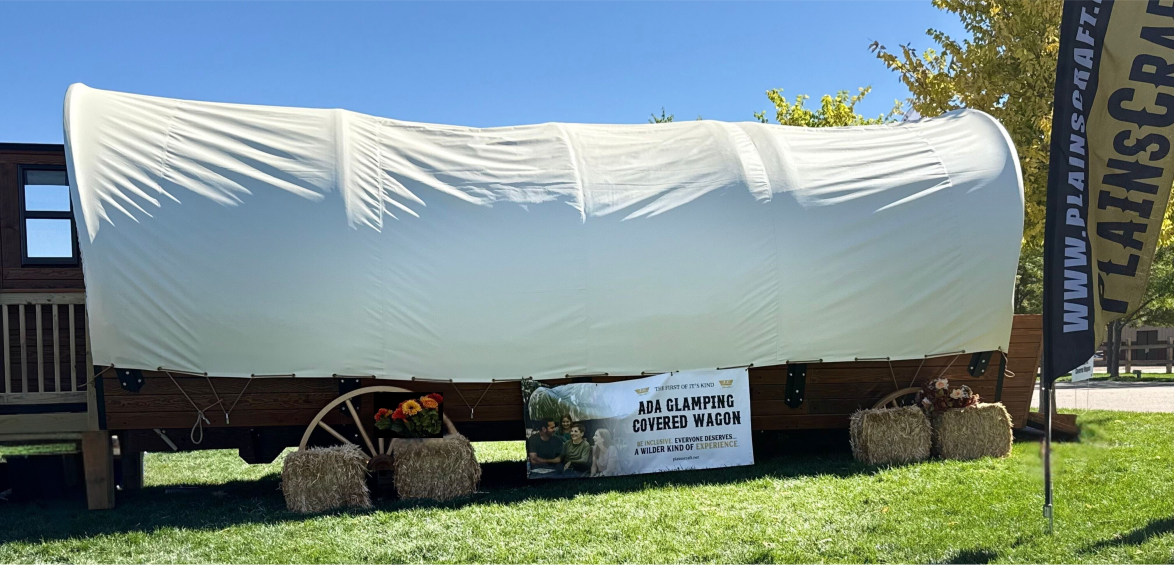
While we couldn’t make it to every session (there were a lot), we took careful notes at the ones we did — and that’s exactly what you’ll find below. As for the rest of our time, you ask? We were proudly showing off the debut of our Shower House and ADA Covered Wagon — which, in our obviously biased opinion, stole the show.
Session: Beyond the Data: Unlocking 2025’s Glamping Industry Insights in the USA and What It Means for You
Speakers: Scott Bahr of Cairns Advisory, Sarah Dusek of Under Canvas & Few and Far, Whitney Scott of Walden Insights, and Todd Waynne-Parry of Aramark, moderated by Steph Curtis-Raleigh
Beyond the Data: The State of the Glamping Industry
This session hit hard and fast right out of the gate — all numbers, nuance, and no time wasted. If you are at all like me and geek out over market data, this certainly set the tone (and stage) for what to expect the rest of the show.
So, here’s what got everyone buzzing:
- Demand and pricing are climbing: Average nightly rate is now at about $251, up 21% since 2023.
- Startup costs have nearly doubled since 2023, and thankfully revenue growth is keeping pace.
- Product diversification continues and more and more operators are offering both on- and off-grid lodging.
- Minimum stay policies are still going (but tread carefully here on when you decided to adopt them (hint: you should be running at near full capacity).
- Pet fees remain common.
- Recreation and wellness lead in amenity investments — because guests want more to do than just stay in a unique structure.
- Financing remains the biggest barrier — largely because lenders are still not sure how to quantify the loan-to-value (LTV) ratio, they want real property.
“Keep imagining the future to create magic moments.”
— Sarah Duske, Under Canvas & Few and Far
PlainsCraft perspective: Great design is just the start; memorable experiences create repeat guests. Every PlainsCraft Wagon is built to help give comfort, uniqueness, and A Wilder Kind of Experience. The release of our ADA Wagon is one way we are expanding the inclusivity of guests to create #MagicMoments.
Read more on our ADA Covered Wagon >
Experience Over Accommodation
The message here was loud and clear: experiences drive bookings. Guests pick what they want to do first —then choose where to stay.
- Flexible bookings boost occupancy.
- Four units or more helps operators find stability and trend lines.
- Diversify site types to balance risk.
- Comfort > off-grid minimalism.
- Guests expect amenities.
- What can the land provide.
- Services – take out, cell service, medical, restaurants, etc…
- Add in corporate or group events: bonding activities, meeting space, catering, etc…
PlainsCraft perspective: Our wagons and shower houses scale easily, making it simple to grow from two units to a full resort. From Sage Outdoor Advisory we later learn the Covered Wagons are only 2.5% of glamping unit types in the industry, this is a great opportunity to be different and provide a unique experience.
Session: Founder Story: From a Hand-Built Honeymoon Treehouse to an Incredible Luxury Outdoor Hospitality Brand
Speakers: Seth & Tori Bolt, Bolt Farm Treehouse
From Treehouse to Powerhouse
This was an overall inspiring session and one that helped operators realize they are NOT alone. Tori and Seth shared their story of heartbreak and triumph.
- Mindset: You’re not a hotel, you are providing something that is priceless and they will want to return again and again.
- We learned a new term “Nimbys” – the ‘not in my backyard’ crowd – they bring in zoning concerns and attorneys — so unlike the old saying, “Ask for permission, not forgiveness”
- Not necessarily recommended, however they captured $1M in pre-sales proved their vision before construction.
They then shared a list of their “10 years of lessons learned.” It was equal parts business masterclass and therapy session; I would highly recommend you check out their Short-term rental (STR) workshop.
- Sell the story, not the room.
- Always get your entitlements in order (make sure you can do it, zoning).
- Corners cut in construction will cost you in maintenance. (just pay for it now, or you will pay later).
- Trade money for time. Turnkey Units — set up and go within hours to days.
- You learn the most important lessons early on.
- Invest in culture: “Pay fewer people, more”.
PlainsCraft perspective: We could not help but revel in the gratification of hearing Seth — a thought leader in the space — open this session talking about Covered wagons – and how they are “a sign of transformation in the industry” – aligning the structure with the pioneer spirit of what glamping is currently in a state of. Like Bolt Farm, we believe brand stories create loyalty — not price tags.

Session: Top 10 Guest Magnets: The Must-Have Amenities That Drive Bookings and Revenue
Speakers: Anne Howard of HoneyTrek, Kathleen Walsh of Outdoor Hospitality Group, and Dan Invergo from Northgate Holdings, moderated by Whitney Scott of Walden Insights
Include Glamping Amenities that Amplify Guest Experience
If there’s one universal truth in glamping, it’s that the little touches make the biggest impact — and this panel came stocked with plenty of them.
- Wi-Fi (although expensive) is now considered a utility.
- Pet-friendly touches – logoed bowls.
- Win reviews: Drinks on arrival and personalized welcomes leave lasting impressions.
- Outdoor showers + saunas extend seasons.
- Indoor outdoor/shower options.
- Don’t use plastic reusable items.
- Having water regardless is important – even a foot pump sink.
- Coffee in the room.
- Local/community activities: what do your neighbors have within 30 minutes to 1 hour.
- Wildflowers – element of freshness (romance).
- Concierge to help plan a stay – book it, reserve it, help them plan
- Quality linens & mattresses define comfort.
Walden Insight’s, Whitney Scott, led engaging rapid-fire questions:
Simplest service element to implement with biggest return in outdoor hospitality?
- Dan – team empowerment – give your team autonomy to surprise and delight guests.
- Ann – welcome drink (local wine, drink, start the relaxation).
- Kathleen – escort to unit – settle you in, set up wifi with the password to increase the personal touch.
What amenity creates the biggest wow factor for glamping stays?
- Dan – themed programing (involving the whole family) — adult activities like sip & paints, and cocktail mixology classes.
- Anne – viewing platform or sunset spot, a firepit – create a vignette for them
- Kathleen – spa services on site (good for girl trips)
PlainsCraft perspective: While there are a lot of great ideas, our goal needs to be providing as many of these considerations as we can to provide the value of turnkey amenities. Like making sure we have space for a coffee bar, linen recommendations, shower options and water source solution (inclusive of off-grid). We need to make sure our wagons and bathhouses empower owners to combine inclusivity, comfort, and design with even the smallest of touches to create extraordinary stays.

“Everyone has a story tell. Encourage them to tell a story”
– Anne Howard, HoneyTrek
Session: The Art of Experiential Hospitality? The Story of Live Oak Lake and How to Build a One-of-a-Kind Micro-Resort
Speaker: Isaac French of Live Oak Lake
The Art of Experiential Glamping
- Focus on the experience: build your unique story
- Utilize events (weddings, retreats) to generate fresh revenue. Agrotourism is the hottest trend no one talks about yet.
- Farm to table eperiences.
- You pick orchards.
- Submerge units in nature:
- Create a magical vibe landscape design is the greatest amenity and highest return on investment.
- Have 3 to 4 units submerged in nature rather than 10+ on top of each other.
- Start small, keep it simple: one great experience, done well.
- Build less, but better.
- Influencer storytelling fuels authentic marketing.
Walden Insights recently released their “2025 Unique Accommodations Buying Guide.” If your still in the planning stages and building out your story, we highly recommend you check this out, it will be a valuable tool to help you build your brand, story, and budget.
In short: start small, think big, and make every stay feel like a story guests can’t stop telling.
PlainsCraft perspective: Every structure we craft helps operators to create living stories, whether you are near the Oregon Trail, in a settlers town, have rustic décor, or are nestled into the woods listening to the rain patter on the bonnet and rumbling thunder (almost as a white noise soundtrack), our wagons provide a simplistic and serene setting to amplify A Wilder Kind of Experience.
Workshop: Sage Glamping Data – Understand Growth Trends, Rates, Unit Types and Amenities
Sponsored by: Sage Outdoor Advisory (SOA)
Defining the Modern Glamping Landscape
Technically, this wasn’t part of the main conference schedule — but if you love a good ‘data deep dive’, this breakout workshop was one to catch. It provided insightful data into the current state of the industry and data points you can take to the bank. You can find the complete document online by clicking here: 2025 USA Glamping Market Report
I always say your strategy is only as good as your data, so when SOA started the presentation out by defining “Glamping” and what parameters** they constructed their report from, I knew I was about to get geeked out on some insightful information.
**They estimated their report covers roughly 70–80 % of the U.S. professionalized glamping market.
Key Glamping Industry Insights
- Total 2024 revenue: $457 million (+40% vs 2022)
- 4.2 million guests nationwide in 2024
- Average rate: $268 /night
- Covered wagons: $268 /night (2.5% of market)
- Private bathrooms: +90% ADR increase
- Two-person units: $318 /night > 3-5 person units
- Covered wagon: operational season ~ 8.3 months
PlainsCraft perspective: All of the data findings affirm our focus on authentic, nature-connected design that balances comfort with simplicity. There is a positive tone to the industry and growth is just where we would want to see it. In the art of transparency, however, there is one caveat we want to make when it comes to the operational season of a covered wagon unit. At PlainsCraft, we have a proprietary Bonnetgard™ Cover System (a 5-layered insulation system) coupled with our 18,000 BTU mini-split that allows the internal temperature to keep guests comfortable at -5 degrees to 110 degrees, so our wagons have ~10 month seasons based on location.
Final Reflection of Glamping Show Americas 2025
If I haven’t bored you yet (and you are still with me), let this be your reminder that innovation in outdoor hospitality is equal parts aspiration, innovation, data, design, inspiration, and intention. That is a lot to bundle into one dream.
At PlainsCraft, we’re proud to help build destinations that inspire — from one covered wagon to an entire resort. Let us utilize our years of experience in the industry to help navigate those channels to build better stories, unique destinations, and A Wilder Kind of Experience.
Meet with a Glamping Expert >
Recommended Reads:
• Comfortably Wild by Mike & Anne Howard
• Unreasonable Hospitality by Will Guidara
Experience PlainsCraft at the Glamping Show 2025
Come see us at Booth #700, where you’ll discover how our unique experiential hospitality structures help you attract more guests, drive bookings, and unlock new revenue streams faster. Step inside our ADA Compliant Wagon and Outdoor Shower House, two turnkey solutions designed to deliver unforgettable stays and dependable ROI.
Turnkey Experiential Hospitality Solutions

ADA Compliant Wagon
Accessibility meets charm. Our ADA Wagon is built for inclusivity and comfort, featuring must-have amenities like en suite options, power, TV, USB, and HVAC — ready for every season.
Outdoor Shower House
Elevate your property with our brand-new Shower House. Durable, versatile, and built for guest satisfaction, it pairs perfectly with wagons or other units to add value and convenience.

Must-Have Amenities Guests Expect
Today’s travelers look for more than just a bed. PlainsCraft structures deliver:
- En suite bathroom options for privacy and comfort.
- Reliable power sources for appliances and connectivity.
- Built-in TVs and USB ports to match modern guest expectations.
- Engineered for all-season climate control with HVAC and Bonnetgard™ technology
Our Bonnetgard™ insulation cover system + our HVAC system, your guests stay at the perfect temperature inside — no matter what’s happening outside.

Attract More Guests. Drive More Bookings.
Our experiential structures are more than accommodations — they’re business drivers. With turnkey solutions designed to open quickly and perform reliably, PlainsCraft wagons and shower houses help you:
- Stand out in a competitive glamping market.
- Offer unique, memorable stays that build guest loyalty.
- Generate revenue faster with units that are simple to set up and easy to maintain.
Can’t Make It to Aurora?
Take a look at our Wagon and Shower House features to see how PlainsCraft delivers durable turnkey hospitality solutions that keep guests coming back, season after season.
PlainsCraft Introduces ADA-Compliant Covered Wagon

Expanding Access to Outdoor Hospitality
Outdoor hospitality feels most authentic—and reaches its highest standard—when it’s welcoming to all. With the launch of our new ADA-Compliant Covered Wagon, PlainsCraft is making that a reality. This design opens the door for travelers of all abilities to experience the comfort, style, and renewal of glamping.
The interiors are fully ADA-compliant, but this wagon is about more than compliance—it’s about creating a sense of welcome that strengthens destinations and creates new opportunities for owners.
A Solution the Outdoor Hospitality Industry Has Been Waiting For
Our flagship PlainsCraft Covered Wagon has already reshaped glamping with its integrated en suite bathroom and Bonnetgard™ insulation system, helping owners extend their season while keeping guests comfortable in both hot and cold weather.
The new ADA-Compliant model builds on that legacy, preserving the wagon’s authentic charm while welcoming even more travelers into the glamping experience.
“Few units on the market today fully meet ADA requirements,” said Dennis Steinman, CEO of PlainsCraft. “Accessibility isn’t just about regulations—it’s about ensuring everyone has the chance to enjoy the outdoors. We’re proud to debut this wagon, because it represents the standard accessibility should meet in outdoor hospitality.”
“Accessibility isn’t just about regulations—it’s about ensuring everyone has the chance to enjoy the outdoors.”
Endless Approaches, Same Destination
Every property is unique, which means there’s no single solution for ADA-compliant access. That’s why the ADA Wagon is designed with flexibility in mind—owners can choose the approach that best fits their terrain and layout.
Options include:
- Ground-Level Wagon – Built closer to the ground with reduced wheel height for direct entry.
- Terrain-Adjusted Access – Use the natural landscape to minimize ramp length and slope.
- Wrap-Around Ramp – 36″ wide with a maximum 1:12 slope.
- Layered Porch with Ramp Access – A multi-level porch design that integrates ramping.
- Wheelchair or Stage Lift – Heavy-duty lift with at least 52″ rise capability.
No matter the approach, the result is the same: a fully ADA-compliant interior that delivers an unforgettable, one-of-a-kind glamping experience.
Designed for Resort Owners, Loved by Guests
Adding an ADA-compliant unit gives properties a competitive edge.
“Every owner we work with is looking for ways to stand out by offering unique features and amenities,” said Shane Burns, Vice President of Sales and Marketing at PlainsCraft. “The moment a guest selects ‘wheelchair accessible’ under amenities, their unit rises in listings with better visibility. It’s a way to expand their audience, reduce competition, and deliver hospitality guests won’t forget.”
“The moment a guest selects ‘wheelchair accessible’ under amenities, their unit rises in listings with better visibility. It’s a way to expand their audience, reduce competition, and deliver hospitality guests won’t forget.”
Crafted for Glamping Comfort and ADA-Compliance
Like all PlainsCraft products, the ADA Wagon is handcrafted in the USA and built for longevity. Key features include:
- ADA-Compliant Interior – Spacious layout and accessible design.
- En Suite Bathroom Options – Mold- and mildew-resistant for lasting comfort.
- Bonnetgard™ Insulation System – Keeps guests comfortable across seasons.
- Turnkey Structural Design – Quick installation so owners can begin generating revenue faster.
- Handcrafted Quality – Built with superior materials and craftsmanship.
A Season of Milestones
This year has been a big one for PlainsCraft. Alongside the ADA Wagon, we introduced our new Shower House, designed to pair perfectly with the 1.2 Bath Outhouse, offering flexible solutions for property owners.
We also earned ANSI 119.5 certification for our wagons—a nationally recognized standard for park model RVs. The process was seamless, thanks to the quality and durability we’ve built into every wagon since the beginning. Now, our customers have the extra reassurance that PlainsCraft wagons are backed by both craftsmanship and the broader park model industry standard.
“These milestones open a world of opportunity for us and our customers,” Steinman said. “When you invest in a PlainsCraft product, you’re getting more than a structure—you’re getting the peace of mind that comes with proven quality.”
See It First at Glamping Show Americas
The ADA-Compliant Covered Wagon will make its debut at Glamping Show Americas in Aurora, Colorado. You’ll find us at Booth #700 in the Outdoor Exhibit area. Stop by for a walkthrough and see firsthand how PlainsCraft continues to shape the future of outdoor hospitality.
“This wagon reflects who we are as a company—building with quality, craftsmanship, and ensuring the outdoor experience is available to more people,” Steinman said. “That’s what matters most.”
👉 Ready to learn more about the ADA Wagon? Stay tuned for more product announcements, or contact our team today at 785-748-4588 or info@plainscraft.net.
Covered wagon road trips: Explore 5 scenic spots
The history of PlainsCraft Covered Wagons wouldn’t be as rich as it is if it weren’t for the Oregon Trail. This period, which lasted from the 1840s into the 1880s, led thousands west from Missouri to Oregon in wagons that looked just like ours, and along the same road where we’re located today. With just a few supplies and a lot of dreams, the settlers who took this road changed the face of the American West thanks to their adventurous spirit.
This same pioneer spirit led us to build our company, and today, our wagons bring a bit of nostalgia and romance to glamping getaways across the country. We believe the original covered wagon road trips are every bit as exciting to experience today, just as our ancestors did so long ago. If you’re interested in following in the footsteps of the early settlers and exploring what made this trail so awe inspiring, check out these five scenic spots from the iconic trail.
Independence, Missouri

You can’t talk about the scenic routes of the pioneers without starting in Independence. Located on the outskirts of Kansas City, Independence served as the beginning of the Santa Fe, Oregon and California trails. The National Frontier Trails Museum, part of the National Park Service, tells the stories of the settlers who began their covered wagon road trips here. You can even take a ride on a historic covered wagon.
Whether you’re looking to stay in Independence, or you want to check out the rest of the Kansas City area, there are so many options for you to enjoy. Watch for historic markers throughout the region, which makes notes of passage routes, wagon ruts, and even covered wagons themselves. The area is also known for its outstanding barbecue, and you can’t go wrong with any of the local Kansas City spots. The area is home to Super Bowl Champions the Kansas City Chiefs, the Negro Leagues Baseball Museum and the National World War I Museum. And known as the City of Fountains, KC has over 200 registered fountains you can view throughout the city.
Chimney Rock in Nebraska

Chimney Rock is a natural landmark that was significant to settlers along the Oregon Trail and still stands as a symbol of exploration today. This rock foundation stands at 480 feet in the North Platte River Valley. Chimney Rock was a pause along the trail that brought awe to settlers along the route.
This location is an outstanding spot for visitors looking to experience a natural landmark. It’s a great destination for nature watching or exploring the Chimney Rock visitor center. Enjoy the stunning views before hitting the road like the settlers did on their trip west.
The Red Buttes in Casper, Wyoming

The Red Buttes, now known as the Bessemer Bend National Historic Site, is located just south of current-day Casper. But during the days of the Oregon Trail, the buttes was a landmark that represented the end of the journey across the flat lands of the current Midwest and into the west. It was also a crossroad for several native tribes that hunted in the area.
Casper is now home to numerous festivals, including the Central Wyoming Fair and Rodeo. Nearby Casper Mountain and the North Platte River also provide abundant opportunities for outdoor entertainment throughout the year. If you’re into floating, fishing, hiking, or skiing, it’s all found in Casper. It’s also a hot spot for craft beer and spirits and it has a thriving culinary scene you’ll be sure to enjoy.
Shoshone Falls in Twin Falls, Idaho

Before Twin Falls was founded in 1904, it was a popular stop along the Oregon Trail thanks to its breathtaking waterfalls, Shoshone Falls and Perrine Coulee Falls. Shoshone Falls is called“Niagara of the West” and at 212 feet, it’s taller than Niagara Falls. Twin Falls is also home to the Snake River Canyon, known not only by the settlers, but for Evel Knievel’s unsuccessful jump across the canyon in 1974.
Twin Falls is a hot spot for outdoor enthusiasts. Its hiking trails take hikers behind the Perrine Coulee Falls. Visitors love kayaking and boating on the Snake River, and zip lining over the canyon. Downtown Twin Falls is a great location for shopping, dining, and soaking up the annual events found in the community. From Western Days to Oktoberfest, there’s something for everyone to enjoy.
Mount Hood, Oregon

Mt. Hood is the tallest mountain peak in Oregon, standing at 11,250 feet above sea level. Located an hour east of Portland, Mt. Hood represented the end of the road for travelers who survived the Oregon Trail. Today, wagon ruts are still found around the mountain. And many of the interpretive centers in the area are filled with artifacts that tell of the journey these pioneers made.
Mt. Hood is also an incredible vacation destination. It’s a dormant volcano that’s surrounded by forest. That means it’s a great spot for skiing, hiking, snowboarding, and just about every other outdoor activity you can imagine. The Mt. Hood area features farms and wineries, craft breweries, and countless restaurants where you can relax after a day on the slopes. Whether it’s the middle of winter or the beginning of summer, there’s a vast variety of things to do at Mt. Hood.
Where will you visit?
Do you have other recommendations about where to visit along the Oregon Trail? Share your own ideas for covered wagon road trips in the comments below.
Add a modern day covered wagon to your outdoor destination by getting in touch today. Let’s create that modern day experience for your guests together.
Where to watch the eclipse with PlainsCraft customers

On Monday, April 8, 2024, the next total solar eclipse will sweep across North America. It will cross from Texas into the Midwest and into Canada, casting darkness across the country. And it will create an added push for tourism in locations where the eclipse is highly visible. If you’re wondering where to watch the eclipse, we’ve got you covered.
A solar eclipse occurs when the moon passes between the sun and Earth, blocking the sun’s light and creating a moment of darkness mid-day. While the last solar eclipse seen in the U.S. was in 2017, it is not expected to happen again for two more decades. And though the eclipse is viewable from locations across North America, there are specific locations where the moon’s path of totality means people in the area will be in complete darkness for a short period of time.
Many PlainsCraft customers are in the path of the eclipse. This means there are several opportunities to experience glamping alongside of this phenomenon. While many places may be booked in advance, these destinations will have full sight of the total eclipse. Check out the following PlainsCraft customers for an eclipse destination. And check out how they are inviting guests to their locations to experience this rare event.
Fredericksburg, Texas
As the maximum eclipse appears between San Antonio and Austin around 1:35 p.m. CST, guests at Texas Wine Country Jellystone Park Camp-Resort will be in the full line of sight of the eclipse. This resort offers the many amenities of a Jellystone Park, and it’s in the heart of wine country for a romantic getaway guests won’t forget. It’s a great location for a relaxing vacation built around the eclipse.
Murchison, Texas
Between 1:40 and 1:45 CST, the eclipse will be clear over Leisure Time Properties at LTP Ranch, a family-friendly destination set in rolling terrain. LTP Ranch offers movies under the stars with a built-in theater set up, and the kids will enjoy making s’mores around the whiskey barrel fire pit.
Mountain Home, Arkansas
Knotty Pines Cabin and Wagon in Mountain Home is a beautiful destination for eclipse-watchers as it arrives between 1:50 and 1:55 CST. This location features four beautiful acres of woods, just moments from restaurants and shops. Knotty Pines also offers an abundance of activities from fishing on the Buffalo River or White River to hiking trails in the Buffalo River Wilderness.
Arcanum, Ohio
Graystone Ranch is a peaceful destination where the eclipse will appear around 3:10 EST. This location offers 26 wooded acres and a gorgeous park-like setting, with a stocked pond for fishing. Stroll through wooded trails or hang out on the lawn for picnics and games. When the eclipse is over, enjoy the winery down the street or stroll by the shops in downtown Greenville.
Clymer, New York
Bison Trace Luxury Camping is a breathtaking getaway to see the eclipse at 3:20 EST. Located near Findlay Lake on the historic French Creek, Bison Trace is a heavily wooded area with an abundance of wildlife and American eagles. Come for the eclipse and stay for the premium glamping experience.
Penn Yan, New York
Between 3:20 and 3:25 EST, Skelly Properties will be on the edge of the full eclipse, which just adds to the charm of this already beautiful destination. Located in Upstate New York, Skelly Properties’ Wine Trail Covered Wagon sits on a private, 6-acre lot in walking distance to Keuka Lake. It’s also close to many of the area’s attractions, including numerous vineyards and other wonderful getaways.
Cavendish, Prince Edward Island, Canada
At 4:35 Atlantic Daylight Time, the eclipse will pass over Marco Polo Land at Cavendish, Price Edward Island in Canada. This distinct glamping and camping getaway is a top-ranked destination in Canada. Its many amenities include a store, restaurant, water zone, and more.
What to know about the eclipse
The window of the partial eclipse lasts for approximately 90 minutes. However, the path of totality and maximum eclipse lasts about 4 minutes in the middle of those 90 minutes. Times listed above are the approximate total and maximum eclipse times. Finally, do not look directly at the eclipse without special protective eye wear. Learn more about safety factors here.
If you watch the eclipse at a PlainsCraft destination, let us know in the comments or tag us on social media to let us know about your experience. And most importantly, have an incredible time during this unforgettable moment, which is exactly why we decided to build PlainsCraft wagons in the first place. And if you’re looking for a unique draw to your park, campground, or destination, get in touch and let’s talk about how glamping is good for business.
The benefits of agritourism and how to know if it’s right for your farm

One of the growing segments of tourism is one that is unique to farms but is providing countless opportunities for those farms to wildly succeed. Agritourism is defined by the United States Department of Agriculture as a commercial business that connects agricultural production and tourism, attracting visitors to entertain or educate and bring in additional income for the farm or business owner. For farm owners, it’s a great way to boost the farm’s economy. And for visitors, it’s a way to learn about farming and other types of agricultural businesses, support small farms, and grow an appreciation for things like food production, farming practices, and more. In short, there are many benefits to agritourism.
If you are already farming on your land, or if you are in the agriculture industry, you may be asking if agritourism is right for you. Or, maybe you’re already offering some forms of agritourism already and wondering what more you can do to enhance your already outstanding offerings. The following is what you should know if you’re wondering if it’s right for you.
How does agritourism benefit farms?
Agritourism is an all-encompassing term for many types of agricultural experiences. You may have traditional farming, U-pick or cut fields, a Christmas tree field, or a farm stay. All of those things can be turned into a way to diversify your income beyond the products you’re selling alone. In fact, research conducted by North Carolina State University shows that agritourism is beneficial, particularly to small farms. By bringing tourists into the inner workings of a farm, it not only increases the farm’s revenue, but it changes the perception of local foods, resulting in more farm-to-table food consumption.
On top of that, the agritourism market is expected to grow significantly by 2030: more than doubling in size from 2022 to 2030. That means more and more farms will become destinations in the next several years. As people continue looking for unique experiences, agritourism answers that desire and allows your guests to enjoy a more relaxing vacation, particularly for urban dwellers who want a deeper understanding of where their food is coming from. As agritourism grows, farms can respond and find a new and diverse form of income for the business.
How does agritourism benefit your guests?
Agritourism has become a rewarding type of travel experience for a variety of people. Of particular note, it’s the younger generations like Millennials and Gen Z who are clamoring for outdoor agricultural experiences. And what’s driving that desire is a want for memorable experiences that give them that better understanding of where their food is coming from. They are hyper-aware of the need for sustainability, and they often see agritourism as a way to experience farming first-hand.
No matter the type of farm you have, you’ll be able to draw in a passionate demographic who wants to get their hands dirty and learn about what your specific farm has to offer. Whether you’re inviting them to pick pumpkins, ride horses, explore a vineyard, pet rescue pigs, or milk a cow, you’ll give them an experience only you can offer. Your farm can give them a way to relax, learn more about agricultural production, or pick their own berries. No matter what, your farm will give them an experience they’ll never forget.

What else can you do to draw in guests?
One of the benefits of agritourism is that there are numerous ways you can draw in guests outside of what you already offer on your farm. In addition to the offerings you currently have available on your property, one of the biggest growth opportunities available to you is taking advantage of the popularity of glamping.
Glamping is booming in North America for the same reason agritourism is experiencing growth. Younger generations, as well as elder Millennials and Gen X, are looking for different experiences that go beyond a traditional vacation. Glamping, a trend that has merged camping with luxurious and unique structures, can diversify your income as your guests want to extend their visits to farms. Glamping is also a great way to keep guests at your farm even longer. According to the North American Glamping Report 2022, glamping is drawing in guests who are staying in their glamping structures for 3 to 5 days at a time and who are willing to spend money on a memorable experience.
Get in touch to see if glamping is right for your farm
PlainsCraft Covered Wagons is proud to share the stories of agritourism ventures that are finding great success with their glamping wagons. If you’re curious about whether wagons might be right for your farming business or to learn more about the benefits of agritourism, get in touch. We’ll walk you through those benefits, help you understand your return on investment, and show you why glamping is the right addition to your property.
